
Hand — In-Office Procedures
Carpal Tunnel Release
A short in-office procedure that relieves pressure on the median nerve at the wrist.
Draft page. The clinical text below is a placeholder outline for you to review, rewrite in your own words, and approve before publishing.
What it is
Carpal tunnel syndrome is caused by pressure on the median nerve as it passes through a tight channel at the base of the palm. The roof of that channel is a thick band of tissue called the transverse carpal ligament. Releasing (dividing) that ligament enlarges the tunnel and takes the pressure off the nerve. The nerve itself is not cut.
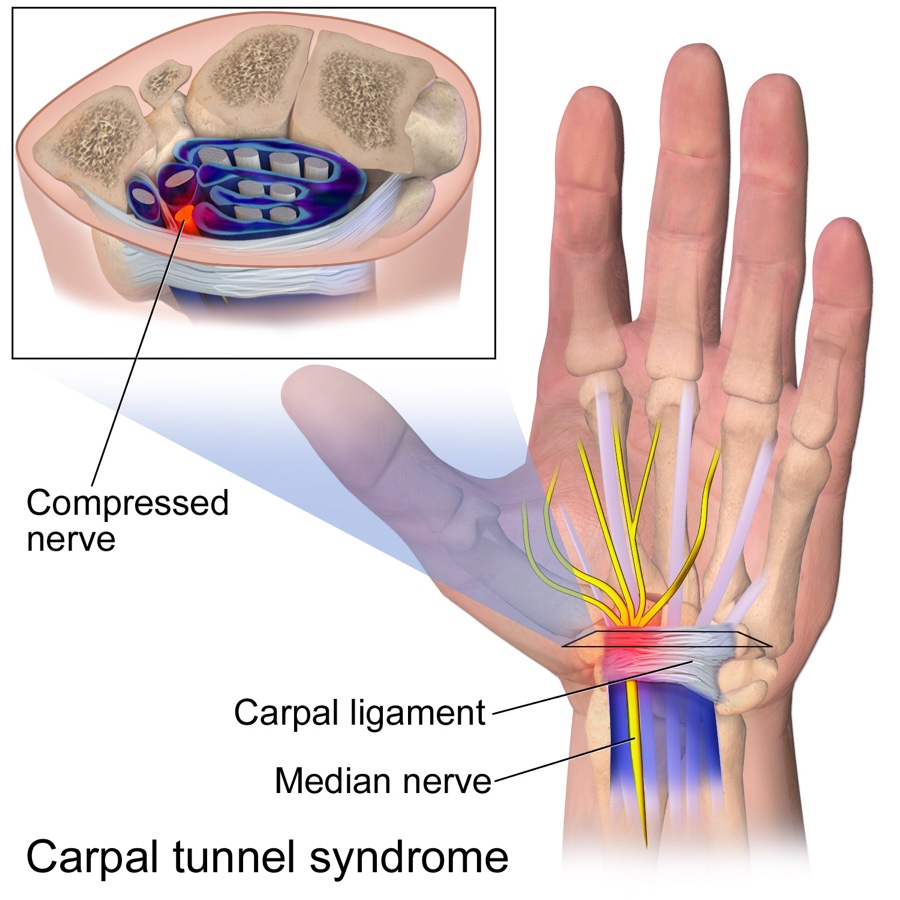
Blausen.com staff (2014). "Medical gallery of Blausen Medical 2014". WikiJournal of Medicine 1 (2). DOI:10.15347/wjm/2014.010. ISSN 2002-4436
Common symptoms
- Numbness and tingling in the thumb, index, long, and part of the ring finger
- Symptoms that wake you at night or occur while driving or holding a phone
- Clumsiness or a tendency to drop objects
- In longstanding cases, weakness or wasting of the muscle at the base of the thumb
Non-surgical options
- A night splint that holds the wrist straight
- Activity modification and ergonomic changes
- A cortisone injection into the carpal tunnel, which often gives temporary or lasting relief
- Anti-inflammatory medication in some cases
The procedure
The release is done in the office under local anesthesia. Through a small incision in the palm, the transverse carpal ligament is divided to open the tunnel. The skin is closed with sutures and a soft dressing is applied. The procedure itself takes roughly 10–15 minutes, and you walk out the same visit.
Recovery timeline
- First weekLight use of the hand for everyday tasks is encouraged. Keep the dressing clean and dry. Elevate to limit swelling.
- Weeks 2–3Sutures are removed. Grip strength and palm tenderness (“pillar pain”) are still returning.
- Weeks 4–6Most patients resume normal activity and lighter work. Night symptoms usually resolve quickly; daytime numbness improves over weeks to months.
- Months 3–6Full grip strength returns. Nerve recovery in longstanding or severe cases can continue for up to a year.
The information on this website is provided for general educational purposes only and does not constitute medical advice, diagnosis, or treatment. It does not create a physician–patient relationship. Always consult a qualified clinician about your individual condition. In an emergency call 911.